- The FMLA in one line
- Both laws apply: 29 CFR 825.701
- How each state program runs with the FMLA
- Substitution of paid leave
- Designating state paid leave as FMLA leave
- Leave that counts under only one law
- The 12-month leave year in a multi-state workforce
- Health benefits and records
- Questions employers ask
- Sources
29 CFR 825.30029 CFR 825.300Code of Federal Regulations, eCFR and 825.701; WHD Opinion Letter FMLA2025-01-A (Jan. 14, 2025).
The FMLA in one line
The federal Family and Medical Leave Act gives an eligible employee of a covered employer “a total of 12 workweeks of leave during any 12-month period”, unpaid and job-protected, for the employee's own serious health condition, a family member's, a new child or a military family need (29 CFR 825.200)29 CFR 825.200Code of Federal Regulations, eCFR. For everything else about the law itself, the DOL's FMLA page is the authority. This page covers one question: what an employer does when the same absence is FMLA leave and state paid leave.
The short answer is that the two run side by side. The state program pays benefits from its fund (or a private plan pays them), and the FMLA protects the job and the health plan. For a covered employer and an eligible employee, a qualifying absence uses up both entitlements at once, the employer must still designate it as FMLA leave, and the FMLA rule that lets an employer require paid time off does not reach the weeks the state pays.
Both laws apply: 29 CFR 825.701
The regulation on state laws starts with a floor: “Nothing in FMLA supersedes any provision of State or local law that provides greater family or medical leave rights than those provided by FMLA.” The agencies stay in their lanes: “The Department of Labor will not, however, enforce State family or medical leave laws, and States may not enforce the FMLA.” The employee does not have to sort the leave: “Employees are not required to designate whether the leave they are taking is FMLA leave or leave under State law, and an employer must comply with the appropriate (applicable) provisions of both.”
The counting rule is the one payroll and HR feel most: “If leave qualifies for FMLA leave and leave under State law, the leave used counts against the employee's entitlement under both laws.” Coverage is decided law by law: “An employer covered by one law and not the other has to comply only with the law under which it is covered.” and “an employee eligible under only one law must receive benefits in accordance with that law” (29 CFR 825.701(a))29 CFR 825.701Code of Federal Regulations, eCFR. An employer's own plan can add rights but not take them away: “An employer must observe any employment benefit program or plan that provides greater family or medical leave rights to employees than the rights established by the FMLA.” (29 CFR 825.700(a))29 CFR 825.700Code of Federal Regulations, eCFR.
The regulation gives a pregnancy example that maps onto state disability programs: “If State law provides half-pay for employees temporarily disabled because of pregnancy for six weeks, the employee would be entitled to an additional six weeks of unpaid FMLA leave (or accrued paid leave).” That is the pattern for a TDI or SDI claim during FMLA leave: the paid state weeks and the FMLA weeks are the same weeks when the reason qualifies under both.
How each state program runs with the FMLA
Most state paid leave laws say expressly that their leave runs at the same time as FMLA leave, and several say the reverse of what employers expect: that the state program pays but does not protect the job, so the FMLA (or a separate state leave law) is what brings the employee back to the same position. The table quotes each state's own text. Where a saved state source does not address the point, the cell says "Not listed".
| Program | How it runs with FMLA leave | Job protection in the state law |
|---|---|---|
| California (PFL) | “PFL provides benefit payments but not job protection.” | “Other federal laws such as Family and Medical Leave Act (FMLA) or the California Family Rights Act (CFRA) may protect your job.” |
| Colorado (FAMLI) | “Colorado's FAMLI program is designed to run concurrently with FMLA.” | After “at least 180 days (roughly six months)” with the employer |
| Connecticut (CT Paid Leave) | Not listed for the federal FMLA; CT Paid Leave pays benefits only | “CT Paid Leave does NOT provide job protected leave”; the CT FMLA does |
| Delaware | “It serves as an insurance plan wrapped around FMLA.” | Yes (19 Del. C. 3707), for an employee who “Has been employed for at least 12 months by the employer with respect to whom leave is requested” and has 1,250 hours of service |
| District of Columbia | Not listed | “DC Paid Family Leave does not provide job protection.” |
| Maine | “Leave taken under this subchapter runs concurrently with leave taken under the federal Family and Medical Leave Act of 1993” | After “at least 120 days” of employment |
| Maryland (FAMLI) | “When an event qualifies for leave through both FMLA and FAMLI, the leaves should run at the same time.” | “Yes, an employer must hold an employee's position while the employee is on FAMLI leave.” |
| Massachusetts (PFML) | Leave “shall run concurrently with leave taken under other applicable state and federal leave laws” (458 CMR 2.01(3)) | Generally yes: “must be restored to the employee's previous position or to an equal position” |
| Minnesota | Not listed | “Job protections start 90 days after your date of hire.” |
| New Hampshire (voluntary) | “NH PFML insurance will run concurrently with the federal Family and Medical Leave Act (FMLA) when a worker is eligible under both programs” | “No, NH PFML does not have a provision for job protection.” |
| New Jersey (FLI) | An employee entitled to FMLA leave “shall take any benefits provided for family temporary disability leave” concurrently with it | Yes, for TDI or FLI benefits received “as of July 17th, 2026”, with no employer size test |
| New York (PFL) | The employer “can require them to run concurrently” if it gives notice | Yes, after “26 consecutive weeks of employment if regularly working 20 or more hours per week” |
| Oregon (Paid Leave Oregon) | “must be taken concurrently with any leave taken by an eligible employee under the federal Family and Medical Leave Act of 1993” | After “at least 90 days before taking leave” |
| Rhode Island (TCI) | The employer may require TCI benefits “concurrently, with any leave taken pursuant to the federal Family and Medical Leave Act” | TCI: “an employer cannot take adverse action against the employee for taking such leave” |
| Virginia (from 2028) | “Leave taken with wage replacement under this chapter that also qualifies as leave under the FMLA shall run concurrently with leave taken under the FMLA.” | After “at least 120 days prior to the commencement” of the leave |
| Washington (Paid Leave) | Restoration applies “regardless of whether the employee also qualifies for and receives concurrent leave under the federal family and medical leave act” | At employers of 25 or more in 2026, 15 or more in 2027, 8 or more from 2028, for an employee who began work “at least 180 calendar days before taking the leave” (RCW 50A.35.010(6)) |
Three rows need a second look. New York lets the employer run the two leaves together only with notice: “In order for the two types of leaves to run together, the employer must notify the employee that the leave qualifies for both FMLA and Paid Family Leave, and that it will be designated as such.” Washington ties its own restoration right to FMLA designation: unpaid FMLA leave counts toward the state's restoration limits only if the employer gives a written notice, within five business days and then at least monthly (RCW 50A.35.010(8)); our designation notice guide lists what it must say. And Colorado puts the tie on the FMLA side: “When an employee applies for FMLA, you as the employer must tell them that they may be eligible for paid leave benefits under the FAMLI program.” The program pages cover each state in full, for example Washington Paid Family and Medical Leave, New York Paid Family Leave and Paid Leave Oregon.
Substitution of paid leave
FMLA leave is unpaid by default, and the FMLA lets either side swap in paid time off: “If an employee does not choose to substitute accrued paid leave, the employer may require the employee to substitute accrued paid leave for unpaid FMLA leave.” Substitution means “the paid leave provided by the employer, and accrued pursuant to established policies of the employer, will run concurrently with the unpaid FMLA leave” (29 CFR 825.207(a))29 CFR 825.207Code of Federal Regulations, eCFR. The statute is the source of that right (29 U.S.C. 2612(d)(2))29 U.S.C. 2612United States Code, Cornell LII.
The rule stops where leave is already paid. For disability plans the regulation says “Because leave pursuant to a disability benefit plan is not unpaid, the provision for substitution of the employee's accrued paid leave is inapplicable, and neither the employee nor the employer may require the substitution of paid leave.” It allows a voluntary top-off: “employers and employees may agree, where state law permits, to have paid leave supplement the disability plan benefits” (29 CFR 825.207(d))29 CFR 825.207Code of Federal Regulations, eCFR.
The Wage and Hour Division applied the same reasoning to state programs in Opinion Letter FMLA2025-01-A, signed by Administrator Jessica Looman on Jan. 14, 2025: “While state or local paid family or medical leave programs are not directly addressed in 29 CFR § 825.207 (d) or (e), the same principles apply to such programs as apply to disability plans and workers compensation programs.” The letter sets three rules for the weeks a state program pays:
- Designation still applies: “if the leave is covered by the FMLA, it must be designated as FMLA leave and the employee must be given notice of the designation”.
- No forced PTO: “the FMLA substitution provision does not apply to the portion of leave that is compensated”, so “neither the employee nor the employer may use the FMLA substitution provision to unilaterally require the concurrent use of employer-provided paid leave during the portion of the leave that is compensated by the state or local program”.
- Top-off by agreement: “the employer and the employee may agree, where state law permits, to use the employee's employer-provided accrued paid leave to supplement the payments under a state or local leave program”.
When the state money stops, the ordinary rule returns: “if the leave becomes unpaid leave for purposes of the state or local paid family or medical leave program, then the FMLA substitution provision would apply”. And the rest of the FMLA keeps running: “Other than the substitution provision, all of the protections of the FMLA, including its anti-retaliation provisions, apply during the time the state or local paid leave and the FMLA leave run concurrently.”
WHD Opinion Letter FMLA2025-01-A, the example on page 4. The vacation total is our arithmetic.
State law decides whether a top-off is allowed at all and on what terms, so check it before agreeing. New York, for one, says “Employers cannot require employees use paid time off while on PFL”. Connecticut lets an employer require accrued paid time off with CT Paid Leave “provided that the total compensation received by the employee does not exceed the employee's regular rate of compensation”. The letter applies to the facts it was asked about: “This opinion is based exclusively on the facts and circumstances described in your request”. It was posted on the DOL's site when we read it on Nov. 22, 2026.
Designating state paid leave as FMLA leave
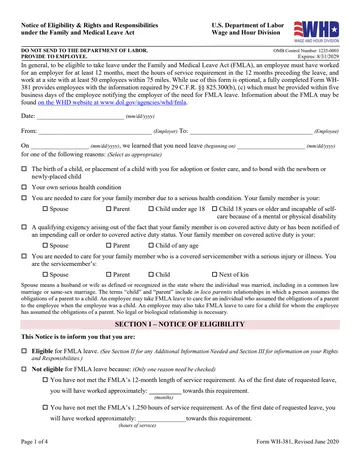
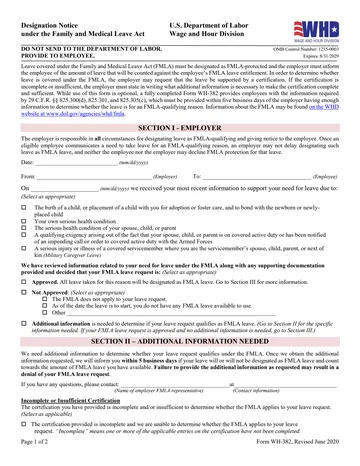
The duty to designate is the employer's: “The employer is responsible in all circumstances for designating leave as FMLA-qualifying, and for giving notice of the designation to the employee”, within five business days of having enough information (29 CFR 825.300(d)(1))29 CFR 825.300Code of Federal Regulations, eCFR. A state claim does not replace that notice. The DOL's own designation form already has a box for it: the paid leave choices on Form WH-382 include “(e.g., Short- or long-term disability, workers' compensation, state medical leave law, etc.)”, and time taken that way “will also be designated as FMLA leave and counted against the amount of FMLA leave you have available to use”.
Designating late has a cost only if it hurts the employee: an employer may designate retroactively “provided that the employer's failure to timely designate leave does not cause harm or injury to the employee” (29 CFR 825.301(d))29 CFR 825.301Code of Federal Regulations, eCFR. The FMLA designation notice guide walks through the eligibility, rights and designation notices, their five-day clocks and the state notices that ride with them, and the FMLA forms page lists each DOL form.
Leave that counts under only one law
State programs often cover people and reasons the FMLA does not, and that leave does not use FMLA time. The regulation's example: where state law covers care for a grandparent or a spouse equivalent and leave is used for that, “the employee is still entitled to his or her full FMLA leave entitlement, as the leave used was provided for a purpose not covered by FMLA” (29 CFR 825.701(a)(3))29 CFR 825.701Code of Federal Regulations, eCFR. The opinion letter says the same for state paid leave: “if an employee uses a state or local paid family and medical leave program under circumstances which do not qualify as FMLA leave, the employer may not count the leave against the employee's FMLA leave entitlement”.
It also runs the other way. Many employers too small for the FMLA are still covered by a state program; Massachusetts puts it plainly: “Even employers who are exempt from FMLA may be subject to PFML”. Maine allows its leave “while ineligible for leave under the federal Family and Medical Leave Act of 1993 in the same benefit year”. Our page on FMLA for small businesses covers the 50-employee and 75-mile tests and the state job protection rules that start at lower sizes.
The 12-month leave year in a multi-state workforce
An employer picks one way to measure the FMLA's 12 months: the calendar year, a fixed leave year, a year measured forward from the first FMLA leave, or “A ‘rolling’ 12-month period measured backward from the date an employee uses any FMLA leave” (29 CFR 825.200(b))29 CFR 825.200Code of Federal Regulations, eCFR. The choice must be “applied consistently and uniformly to all employees”, and changing it takes “at least 60 days notice to all employees” (825.200(d)(1)).
The regulation carves out the multi-state case: a state with its own family and medical leave law “may require a single method of determining the period during which use of the leave entitlement is measured”, and the employer “may comply with the State provision for all employees employed within that State, and uniformly use another method provided by this regulation for the leave entitlements described in paragraph (a) for all other employees” (825.200(d)(2)). Some state programs borrow the FMLA period outright: Delaware defines its application year as “the 12-month period as defined in the FMLA” (19 Del. C. 3701). An employer that never chooses gets the method “that provides the most beneficial outcome for the employee” (825.200(e)).
Health benefits and records
During FMLA leave the group health plan stays in place: “An employee on FMLA leave is also entitled to have health benefits maintained while on leave as if the employee had continued to work instead of taking the leave.” (29 CFR 825.100(b))29 CFR 825.100Code of Federal Regulations, eCFR. Several state programs carry their own health benefit rule; Colorado's guide, for example, says “employers are required to maintain the employee's health care benefits” during FAMLI leave.
Records must keep the two laws apart. FMLA leave “must be designated in records as FMLA leave; leave so designated may not include leave required under State law or an employer plan which is not also covered by FMLA” (29 CFR 825.500(c)(2))29 CFR 825.500Code of Federal Regulations, eCFR, and FMLA records are kept “for no less than three years” (825.500(b)). In payroll terms: tag each absence by law (FMLA, state program, both), keep the state benefit weeks and any agreed top-off visible, and do not count state-only weeks against the FMLA balance. State benefits also have a tax side; our page on whether paid family leave is taxable covers it.
Forms, line by line
Questions employers ask
Does state paid leave run at the same time as FMLA leave?
Yes, when the absence qualifies under both laws and the employer and employee are covered by both. 29 CFR 825.70129 CFR 825.701Code of Federal Regulations, eCFR says the leave counts against the employee's entitlement under both laws, and most state laws say the same, for example Oregon, Maine, Virginia and Massachusetts.
Can we require an employee to use PTO while receiving state paid leave benefits?
Not under the FMLA. WHD Opinion Letter FMLA2025-01-A says the substitution provision does not apply to the weeks the state program pays. The employer and employee may agree to use PTO to top off the benefit where state law permits. Once the state benefit ends and the leave is unpaid, substitution applies again.
Do we still send an FMLA designation notice if the employee filed a state claim?
Yes. The opinion letter says leave under a state program that is covered by the FMLA must be designated as FMLA leave with notice to the employee, including the amount of leave counted. Form WH-382 has a box for time covered by a state medical leave law.
If our state program does not protect jobs, is the employee's job protected?
It can be, through the FMLA or another state leave law. California, the District of Columbia and Connecticut's paid leave programs pay benefits without job protection, and their agencies point to the FMLA (and in Connecticut the CT FMLA) for the job right.
Does leave for a grandparent under a state program use FMLA time?
No. Leave for a reason the FMLA does not cover does not count against the FMLA entitlement (29 CFR 825.701(a)(3))29 CFR 825.701Code of Federal Regulations, eCFR.
Who enforces which law?
The DOL's Wage and Hour Division enforces the FMLA and does not enforce state leave laws; states enforce their own laws and may not enforce the FMLA (29 CFR 825.701(a))29 CFR 825.701Code of Federal Regulations, eCFR.
Sources
- Family and Medical Leave Act, 29 U.S.C. chapter 28 (govinfo); 29 CFR part 82529 CFR part 825Code of Federal Regulations, eCFR, part index, eCFR text current as of Nov. 1, 2026: 825.100, 825.200, 825.207, 825.300, 825.301, 825.500, 825.700, 825.701
- U.S. Department of Labor, Wage and Hour Division: Opinion Letter FMLA2025-01-A (Jan. 14, 2025), FMLA forms, FMLA page, Form WH-382
- States: EDD Paid Family Leave; Colorado FAMLI employer's guide; CT Paid Leave and FMLA; 19 Del. C. ch. 37 and the Delaware Paid Leave employer guide; DC Paid Family Leave FAQ; 26 M.R.S. 850-B and 850-J; Maryland FAMLI FAQs (April 2026); 458 CMR 2.00 and the 2027 Massachusetts PFML poster; Minnesota Paid Leave; NH PFML FAQ; NJ Temporary Disability Benefits Law and the NJDOL employer handbook; NY Paid Family Leave and other benefits; ORS chapter 657B; R.I. Gen. Laws 28-41-35 and RI DLT employer page; Va. Acts 2026, ch. 1093; RCW 50A.35.010