Counted from the tables below; a program can count in more than one tile.
How to read the tables
Each row is one program, in order by state, and the name opens the notices section of the program's own page. The poster and notice cells link to the rule or agency page that requires them, and the "Download" column opens the agency's own poster or notice file. "Not listed" means the saved sources state no rule for that program as of Nov. 22, 2026. A missing penalty in the second table means none is stated in the sections we read, not that a missed notice is free.
Most programs have two duties, and payroll teams often meet only one. The poster goes on the wall where employees see it. The written notice goes to each employee, usually at hire and often again later, and in several states the employer must be able to prove delivery. Minnesota: “Delivery is made when an employee provides written or electronic acknowledgment of receipt of the information.” DEED adds: “NOTE: Do not send employee acknowledgment to Paid Leave. Keep the acknowledgment for your records.” The paid leave notice and poster checklist turns the table into a list for each new state.
Posters and written notices by program
As of Nov. 22, 2026.
Several posters change each year with the rate, so a poster from last year can be out of date on Jan. 1. DC replaces its notice every year: “The notice will be updated each November and required to be posted no later than the following February.” Its 2027 notice states “The current maximum weekly benefit amount is $1,100.” Washington and Massachusetts have posted their 2027 posters (the download links above), and Colorado's notice already states the 2027 rate: “For 2027, your employer sends 0.43% of your wages to the FAMLI benefit fund.” New York's notice is a deduction notice the state recommends rather than requires, and its 2027 template notes “This deduction may fluctuate pay period to pay period, depending on your hours worked.”
Remote and hybrid staff still need the notice. Oregon says so directly: “Employers must provide notice to remote-work employees by hand delivery, electronic delivery, or regular mail at the employee’s hire or assignment to remote work.” Maine's employer page allows the poster to be shown “in person or online”, and Rhode Island's DLT says employers “may email or text this web page” with its posters to remote staff. An employer with an approved private plan keeps its poster duties in most states; Massachusetts says so in its exemption rules, and the plan rules are on the private plans page.
Languages and penalties
The rows below are the programs whose sources set a language rule or a penalty.
The language line differs by state. Maine counts “the primary language of 3 or more employees of that workplace, if such notice is available from the department”; Minnesota and Massachusetts count five or more, and Minnesota counts contractors too. Delaware and Virginia require English and Spanish plus any first language of 5% of the workforce. Oregon's written notice “must be in the language the employer typically uses to communicate with the employee”. Most language rules apply only when the agency has published the translation, so check the agency's poster page before the first payroll in a new state.
The dollar penalties are modest but count per employee. Minnesota can issue “a civil penalty of $50 per employee, and for each subsequent violation, a civil penalty of $300 per employee”, and Massachusetts has the same scale. DC adds a daily amount for a missing poster. The larger cost is elsewhere: in Massachusetts, “If an employer fails to provide notice of this chapter as required under subsection (a), the employee's notice requirement shall be waived.” Maine's statute has the same rule, so an employer that skipped the notice cannot fault an employee for short notice of leave. Minnesota and Maine put the burden of proof on the employer: “The employer shall have the burden of demonstrating compliance with this section.”
When notices are due
Program statutes and agency employer pages, as quoted in the table.
The notice at hire is the common thread: thirteen programs tie a written notice to hiring, and Connecticut, DC and Virginia repeat it every year. Connecticut's statute: “Each employer shall, at the time of hiring, and annually thereafter, provide written notice to each of the employer's employees”. Notices also follow events. New Jersey's toolkit lists them: “Give written notice of these programs when an employee is hired, requests information, or notifies an employer of their need for leave.” New York DBL requires the DB-271S “within five days of learning that the worker is disabled (WCL §229[2])”. Massachusetts adds a rate notice: “employers must provide information on the new contribution rate 30 days in advance of the rate change”. For the Jan. 1, 2027 change, that is by Dec. 2, 2026 (our arithmetic).
Maryland's first year has its own schedule. MD Labor's guidance requires a withholding notice one pay period before the first deduction, and a benefits notice “To all current employees by July 1, 2027 (six months before benefits become available)”, then “Once per year starting July 1, 2028 (annual notice)”. Signatures are “a recommended practice”, not a requirement. No Maryland poster rule appears in the saved sources.
Where the agency page and the statute differ
Two programs give different deadlines in different places. We quote both and say which governs.
Maine: within 30 days, or at hire?
The statute sets the written notice “not more than 30 days from the beginning date of the employee's employment” (26 M.R.S. 850-I). The Department's employer page agrees: “Provide notice to employees about Maine Paid Family and Medical Leave (PFML) benefits within 30 days of hire.” Its FAQ is stricter: “This notice must be given at the time of the hire.” The statute governs, so a notice within 30 days complies; giving it with the hiring paperwork meets both.
Washington: five business days from when?
ESD tells employers to use its notice and “Send it to your employee within five business days of learning they had a qualifying event.” The statute's deadline is “within five business days after the employee's seventh consecutive day of absence due to family or medical leave, or within five business days after the employer has received notice that the employee's absence is due to family or medical leave, whichever is later” (RCW 50A.20.010). The statute governs, and it allows the later date; ESD's earlier date always meets it, so sending the notice when you learn of the event is the safe practice.
Programs run through insurance
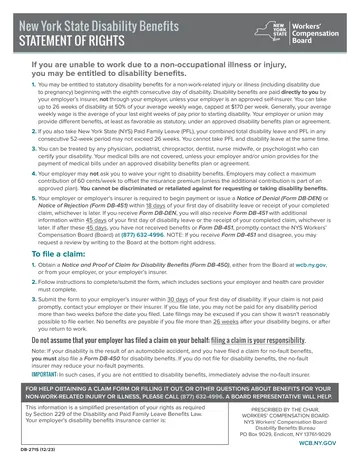
Where the employer buys coverage, the notice usually comes from the carrier. New York: “Your insurance carrier will provide you with a notice to employees (Notice of Compliance) stating that you have Paid Family Leave insurance.” The DB-120 for disability works the same way, and WCB's forms page says “This form is not filed. It is completed by the licensed insurance carrier or self-insured administrator with identifying insurance information and then displayed by the employer in the workplace.”
Hawaii's rule is in its TDI regulations. An insured employer “shall post and maintain in a conspicuous place or places in and about the employer's places of business typewritten or printed notices stating that the employer has obtained insurance to provide for the payment of disability benefits required by law” (HAR 12-11-56), and a self-insured employer posts a notice “stating that the employer is providing directly for the payment of disability benefits required by law” (HAR 12-11-66). DCD's forms page lists no poster form number, so ask the carrier or DCD for the current version.
Hawaii Administrative Rules 12-11-56 and 12-11-66.
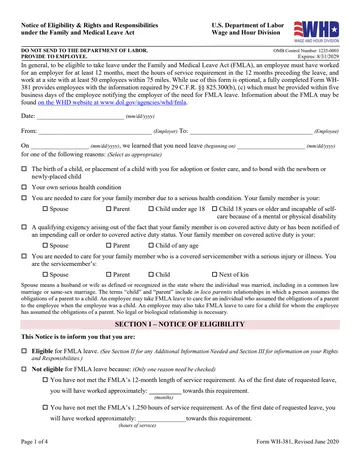
Puerto Rico's program supplies its own poster: “Dicho cartelón será suministrado por el Programa” (the program supplies it; Reglamento 1, sec. 3), and DTRH's site has no download for it. New Hampshire has no poster or notice at all: “No. Employers are not required to provide workers with notice that they are not offering NH PFML”. Vermont's voluntary plan has none either, but Vermont's unpaid leave law has a poster on Commissioner of Labor forms for employers it covers. Federal FMLA notices are separate and are covered on the FMLA and state paid leave page.
Forms, line by line
Templates
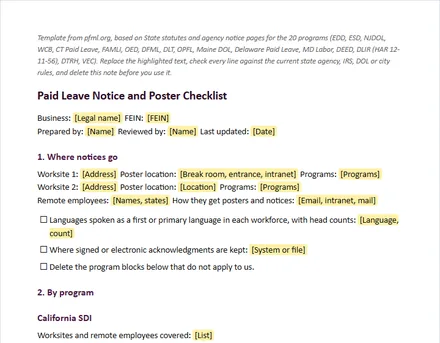
Notice and poster checklist
Every state paid leave and disability program's poster and written notice in one checklist: what to post, what to hand out, when and in which languages.
Questions employers ask
Which states require a paid family leave poster?
California (DE 1857A), Colorado, DC, Maine, Massachusetts, Minnesota, New Jersey (PR-1 and PR-2), Oregon, Rhode Island, Washington and, once the agency provides one, Delaware and Virginia. New York and Hawaii require a posted coverage notice, and Puerto Rico a SINOT poster.
When must the written paid leave notice be given?
Usually at hire. Maine, Massachusetts and Minnesota allow up to 30 days; Connecticut, DC and Virginia also require it every year; and several states require it again when an employee asks for leave.
Does the poster have to be in other languages?
In several states. Minnesota and Massachusetts require the primary language of five or more workers, Maine three or more, and Delaware and Virginia English, Spanish and any language of 5% of the workforce, when the agency publishes it.
What is the penalty for not giving the paid leave notice?
$50 per employee for a first violation in Minnesota, Maine and Massachusetts, rising to $300 ($150 in Maine); up to $100 per employee and $100 a day in DC; a $250 fine in New Jersey; up to $100 per willful offense in Washington.
Do remote employees need the notice?
Yes. Oregon requires delivery by hand, email or mail at hire or assignment to remote work, and Maine and Rhode Island allow the poster to be shared online.
Where do New York employers get the PFL and DBL notices?
From the disability and PFL insurer: the Notice of Compliance (PFL-120) and the DB-120. Self-insured employers get them from the Board.
Sources
- Each cell links to the rule or agency page that requires the poster or notice; the "Download" column opens the agency's own file.
- Quoted in the text: Minn. Stat. 268B.26; 26 M.R.S. 850-I; DFML informing your workforce; M.G.L. c. 175M, s. 4; D.C. Code 32-541.06; RCW 50A.20.010; RCW 50A.20.020; Paid Leave Oregon Employer Guidebook; New York PFL employer responsibilities; MD Labor employee notification guidance; NJDOL employer toolkit
- Hawaii: HAR chapter 12-11; Puerto Rico: SINOT Reglamento 1; Vermont: 21 V.S.A. 472