Counted from the tables below. New Hampshire and Vermont are voluntary programs the employer buys.
How to read the tables
Each row is one program, in order by state, and the name opens the private plan section of the program's own page, where the steps and forms are covered in full. Each cell links to the statute, rule or agency page that states it, and the "Apply or learn more" column opens the agency's own private plan page or form. "Not listed" means no saved agency source gave the fact as of Nov. 22, 2026: for a fee, it means the sources name none, not that the plan is free.
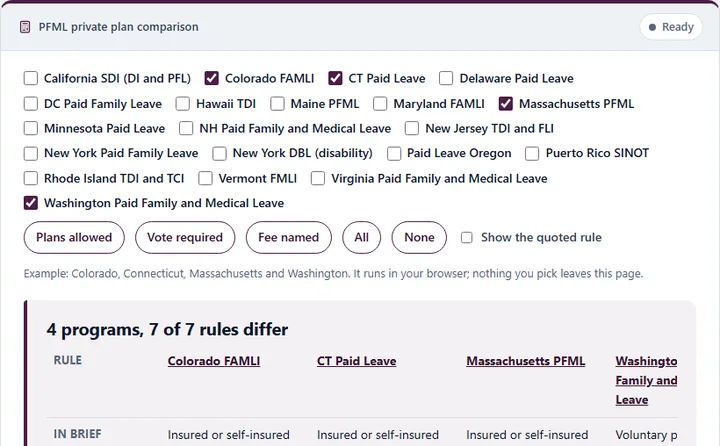
The states use different words for the same idea: a private plan (Colorado, Connecticut, Delaware, Maine, Maryland, New Jersey, Puerto Rico, Virginia), an equivalent plan (Minnesota, Oregon), a Voluntary Plan (California, Washington) and an exemption (Massachusetts). Each is an employer plan, insured or self-insured, that pays at least the state's benefits and lets the employer stop paying the state premium once it is approved. The private plan comparison tool and the private plan renewal tracker build on these tables.
Program statutes and agency private plan pages, as quoted in the tables.
Which programs allow a private plan
As of Nov. 22, 2026.
Thirteen programs allow substitution. Two do not. DC's statute requires that “A covered employer shall contribute an amount equal to 0.75% of the wages of each of its covered employees”, with no exemption for an employer's own plan in the saved sources, and Rhode Island's TDI chapters (R.I. Gen. Laws 28-39 to 28-41), read in full, have no section that provides a private plan, a voluntary plan or an employer opt-out. An employer in either place may still offer its own leave pay on top; DC's FAQ says “it is up to the discretion of your employer to determine how their employer-provided benefits will coordinate with DC Paid Family Leave benefits.”
Three programs are private by design. Hawaii's TDI law requires each employer to secure coverage itself. DCD's first route: “By purchasing insurance, called an ‘insured’ plan, from an authorized insurance carrier.” A self-insured plan or a bargained plan also counts. New York's disability and Paid Family Leave coverage is bought from a carrier or the State Insurance Fund, which “NYSIF must provide insurance to any employer seeking coverage”, or self-insured. New Hampshire and Vermont run voluntary programs that are themselves insurance plans; New Hampshire also counts “Self-insured employer equivalent benefit coverage” as an alternative.
Fees, bonds, renewal and employee votes
Fees run from Oregon's “$250 (nonrefundable) for a new application” to Minnesota's “$1,000 for employers with 500 or more employees” and Maryland's yearly “$1,000 (all employer sizes)” for self-insured plans. Colorado adds a yearly maintenance fee on top of its $500 application fee. Self-insured plans need security sized to the risk: Minnesota asks for “a surety bond in an amount equal to the employer's annual premium that it would otherwise be required to pay”, Connecticut for a bond “equal to the estimated yearly contributions of your employees”, and Maryland gives the shorthand that “the surety bond is 648 multiplied by the number of employees you have rounded to the closest 50”.
Renewal is where approved plans lapse. Massachusetts: “Employer exemptions must be renewed annually.” Washington: “For the first three years of a voluntary plan's existence, reapproval is required every year.” Oregon has the same three-year cycle of yearly reapplication. Connecticut and Maine approve for three years and Virginia for two. Delaware's self-insured plans renew on their own unless something material changes by Dec. 1.
Three programs require an employee vote or written consent. California's plan needs “written approval from the majority of employees eligible for coverage”. Connecticut counts “at least 50% + 1 of the total number of employees working in Connecticut for the employer voted in favor the plan”, and “Any employee working in Connecticut who does not vote will be counted as a No vote”. Puerto Rico requires the written consent of 50% plus one of the employees when they contribute. New Jersey's page and statute read differently, and we quote both. The page: “A written election must be held, unless waived, if the plan is contributory and covers members of a Collective Bargaining Agreement. A majority of employees must agree to the plan prior to the effective date of the plan.” The statute: “In the case of employees not subject to a collective bargaining agreement, no employee consent or written election is required for the withdrawal from the State plan or the establishment of a private plan.” The statute governs, so the majority vote applies only to a contributory plan covering employees under a bargaining agreement that does not waive it.
What a private plan must match
Every program that allows a plan sets two tests: the benefits must be at least the state's, and the employee may pay no more than under the state plan. Minnesota's statute is typical: the plan “must confer all of the same rights, protections, and benefits provided to employees under this chapter”. California goes further and requires that a plan “Offer all the same benefits equal to SDI and at least one benefit that is better.” Connecticut rules out a common shortcut: “A short-term disability policy will not qualify”. Maine says the same about leave policies: “An internal leave policy, on its own, does not meet these requirements.”
The cost test caps the payroll deduction at the state's employee share, so a plan cannot be a way to charge employees more. Massachusetts puts the 2027 ceiling at 0.46% of wages, Maine at 0.5% “until at least 2028”, and Washington ties voluntary plan deductions to the state maximum. The employer may pay more of the premium than the state plan would require; it may not pass more on. The state employee shares are on the employer and employee split page.
Timing: when a plan can start
No program lets a plan start the day the application goes in. Colorado's plan starts “no earlier than 60 calendar days after the Private Plan application was submitted”. Massachusetts requires approval in the quarter before the exemption starts, and Connecticut “no later than 30 calendar days before the end of the quarter prior to the quarter in which the approval takes effect”. California wants the application 30 days before the requested start. Puerto Rico's plans start on July 1 after an application by April 30. Maryland's first applications are due Oct. 1, 2027, and its Declaration of Intent window for 2027 has closed: “The DOI window has closed.”
Delaware's start dates differ between its statute and its regulation, and we quote both. The statute: “The Department must accept applications for approval of an employer's use of a private plan on a rolling basis, with effective dates of January 1, April 1, July 1, or October 1.” The regulation still describes a window: employers “may apply to use a private plan as an alternative to the public plan or renew the approved private plan from October 1 through December 1”. The statute governs, and the Division's own employer page follows it with quarterly start dates.
Built from the rules in the tables on this page.
What an approved plan does not end
Approval stops the state premium for the covered leave, not the rest of the program. Colorado: “Employers must continue to submit wage data and pay FAMLI premiums until their application is approved by the Division.” Connecticut: “Contributions continue to be owed to the Authority until the plan takes effect.” Minnesota keeps the reports going for the life of the plan: “Employers covered under a private plan are subject to the quarterly wage reporting requirements under section 268B.12.” Massachusetts keeps the posters: “Even if your exemption is approved, you must continue to comply with an employer's duty under M.G.L. c. 175M, sec. 4 to display workplace posters”. A Washington plan for one kind of leave leaves the other premium owed: the employer “is still obligated to remit to the department premiums owed to the state plan for the portions not covered by the employer's approved voluntary plan”.
Leaving a plan has its own rules. Minnesota requires an employer whose plan ends to stay on the state plan for at least three years. New Jersey ends a plan “30 days after the postmark date of the letter”. California tells Voluntary Plan employers: “You must secure any contributions required from VP employees in a trust fund.” The notices that go with a plan are on the posters and notices page, and the reports on the reports and due dates page.
Does a private plan need a Form 5500?
Sometimes. The federal benefit plan law (ERISA) requires an annual report from many employee welfare plans, and the Labor Department's rule names the form: “A Form 5500 ‘Annual Return/Report of Employee Benefit Plan’”. Two federal rules keep many state paid leave plans out of it.
First, ERISA's coverage section does not apply to a plan that “is maintained solely for the purpose of complying with applicable workmen’s compensation laws or unemployment compensation or disability insurance laws” (29 U.S.C. 1003(b)(3))29 U.S.C. 1003United States Code, Cornell LII. A plan an employer keeps only to meet a state disability or paid leave law, with the state's benefits and nothing more, fits those words. A plan that pays more than the law requires, or that no state law requires at all, such as an employer plan bought under New Hampshire's or Vermont's voluntary programs, or a California Voluntary Plan with its required better benefit, may not.
Second, a small welfare plan that is covered by ERISA may still be exempt from the annual report. The exemption is for a plan “which covers fewer than 100 participants at the beginning of the plan year”, whose benefits are paid “solely from the general assets of the employer or employee organization maintaining the plan” or are “provided exclusively through insurance contracts or policies issued by an insurance company”, and for such a plan “the administrator of such plan is not required to file with the Secretary an annual or terminal report” (29 CFR 2520.104-20)29 CFR 2520.104-20Code of Federal Regulations, eCFR. A plan with 100 or more participants, or one funded through a trust, does not get that exemption.
So the plans most likely to need a Form 5500 are self-insured or trust-funded plans with 100 or more participants that go beyond what a state law requires, and larger insured plans in New Hampshire and Vermont. Whether a given plan files is a federal question that turns on its design. form5500.org covers who files, the small plan rules and how to file.
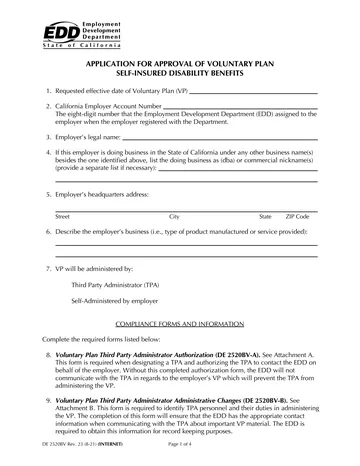
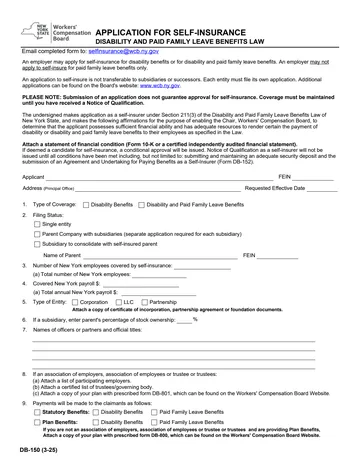
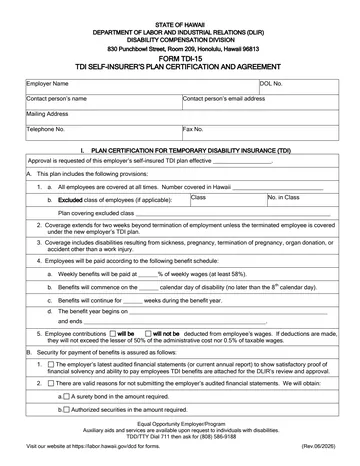
Forms, line by line
Tools and templates for this topic
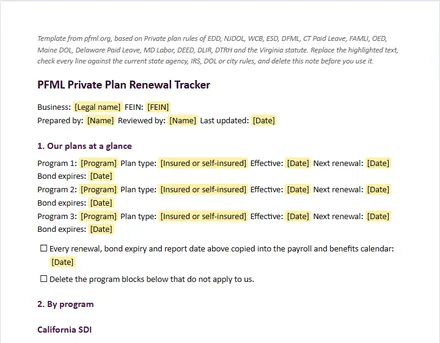
Private plan renewal tracker
Track private, equivalent and self-insured paid leave plans state by state: when to apply, what it costs, the bond, the renewal date and the vote.
Questions employers ask
Which states allow private plans for paid family leave?
California (Voluntary Plans), Colorado, Connecticut, Delaware, Maine, Maryland, Massachusetts (exemptions), Minnesota and Oregon (equivalent plans), New Jersey, Puerto Rico, Virginia from 2028 and Washington (voluntary plans). DC (in the saved sources) and Rhode Island (in its TDI chapters) do not.
Can a private plan charge employees more than the state plan?
No. Every program that allows a plan limits the employee's cost to what the state plan would charge, such as 0.46% of wages in Massachusetts for 2027 and 0.5% in Maine.
Do employees have to vote on a private plan?
In Connecticut and California, yes, every time; in Puerto Rico when employees contribute; in New Jersey only for a contributory plan covering employees under a bargaining agreement. Colorado requires notice to employees 30 days before the plan starts instead of a vote.
Do we still file wage reports with a private plan?
Usually yes. Minnesota, Massachusetts and Oregon keep the quarterly report, and Colorado and Connecticut keep the state premium due until the plan is approved and in effect.
How often does a private plan have to be renewed?
Every year in Massachusetts, every year for the first three years in Washington and Oregon, every two years in Virginia and every three years in Connecticut and Maine.
Does a state paid leave plan need a Form 5500?
Not if it is kept only to comply with a state disability insurance law (29 U.S.C. 1003(b)(3))29 U.S.C. 1003United States Code, Cornell LII, and not if it is a small insured or unfunded welfare plan with fewer than 100 participants (29 CFR 2520.104-20)29 CFR 2520.104-20Code of Federal Regulations, eCFR. Larger self-insured plans that go beyond the law may need one.
Sources
- Each cell links to the statute, rule or agency page that states it; the "Apply or learn more" column opens the agency's own private plan page or form.
- Quoted in the text: Minn. Stat. 268B.10; FAMLI private plans; CT Paid Leave private plans; how to apply for a CT private plan; DFML applying for an exemption; Maryland FAMLI plan options; Maine PFML employer FAQ; Paid Leave Oregon equivalent plans; NJDOL employer page; N.J. Temporary Disability Benefits Law; 19 Del. C. ch. 37; EDD Voluntary Plan page
- Federal: 29 U.S.C. 1003; 29 CFR 2520.104-20; 29 CFR 2520.103-1