Rhode Island's 2027 rate is set by Nov. 15 each year and was not posted in the saved sources; Puerto Rico's is 0.60% on the first $9,000.
Which states have disability insurance
Five states and Puerto Rico require disability insurance for off-the-job illness and injury: California, New Jersey, New York, Rhode Island, Hawaii and Puerto Rico. New York's Workers' Compensation Board puts it plainly: “New York is one of a handful of states that require employers to provide disability benefits coverage to employees for an off-the-job injury or illness.” Four of the six now carry a family leave benefit on the same deduction or policy: California's Paid Family Leave, New Jersey's Family Leave Insurance, New York's Paid Family Leave and Rhode Island's Temporary Caregiver Insurance. Hawaii and Puerto Rico have disability insurance only.
Coverage is broad in all six. California requires coverage for “employees with payroll over $100 in a calendar quarter”; in New York, “Virtually all employers in New York State must provide disability and Paid Family Leave benefits coverage for their employees”; in Hawaii, “An employer or an association of employers shall secure temporary disability benefits for their employees”. An employer with one employee in these places should expect to be covered. Each program page has the state's own coverage test and exclusions: California SDI, NJ TDI and FLI, NY DBL, Rhode Island TDI, Hawaii TDI and Puerto Rico SINOT.
State fund or employer plan
The six programs split into two designs, and the design decides what payroll does. In a state fund, the employer withholds a set rate, files a quarterly report and pays the state. In an employer plan, the employer buys or provides the coverage, and the payroll deduction only offsets its cost. Hawaii's Division says “Do not submit payment to the State. The State of Hawaii does not assess a disability tax (SDI) and does not collect a disability tax payment since employers are required to obtain coverage.”
California EDD, NJ Division of Temporary Disability and Family Leave Insurance, RI DLT, Puerto Rico DTRH, NY WCB, Hawaii DLIR; HRS 392-43(g).
Rates and wage bases, 2026 and 2027
Each row comes from the agency's rate notice, employer page or statute (the source link opens it). New York's row is the disability benefits law alone; its Paid Family Leave rate is on the NY Paid Family Leave page.
| Program | Agency | 2026 rate | 2027 rate | 2027 wage base | Who pays | Report | Private plans | Source |
|---|---|---|---|---|---|---|---|---|
| California SDI (DI and PFL) | Employment Development Department (EDD) | 1.3% of all wages (SDI, withheld from employees) | 1.4% of all wages (SDI) | No cap: all wages are subject to SDI | Employees pay all; no employer share | DE 9 and DE 9C quarterly, due Apr 1, Jul 1, Oct 1, Jan 1 | Voluntary Plan approved by EDD, with a security deposit | edd.ca.gov |
| New Jersey TDI (and FLI) | NJ Department of Labor and Workforce Development | Worker TDI 0.19%, FLI 0.23%; employer TDI 0.10% to 0.75% | Worker TDI 0.24%, FLI 0.24%; employer TDI by rate notice | $177,100 (worker TDI and FLI); $46,400 (employer TDI) | Workers pay TDI and FLI; employers pay TDI only | NJ-927 and WR-30 quarterly, by the 30th after the quarter | Insured, self-insured or union plan approved by the Division | nj.gov |
| New York DBL | Workers' Compensation Board | Employee up to 0.5% of wages, max $0.60 a week | Employee up to 0.5% of wages, max $0.60 a week | No annual base: $0.60 a week cap | Employer may collect up to $0.60 a week; pays the rest | No state report: coverage is an insurance policy | Carrier policy, State Insurance Fund or self-insurance | nysenate.gov |
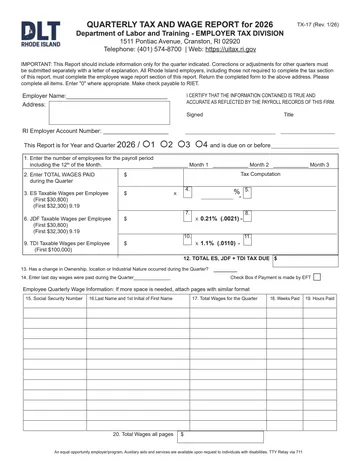
| Rhode Island TDI (and TCI) | RI Department of Labor and Training (DLT) | 1.1% of wages up to $100,000 (employee only) | Not listed | At least $100,000 (formula in R.I. Gen. Laws 28-40-1) | Employees pay all through wage deduction | TX-17 quarterly: Jan 31, Apr 30, Jul 31, Oct 31 | None: every covered employer withholds TDI for the state fund | dlt.ri.gov |
| Hawaii TDI | DLIR Disability Compensation Division | Employee share up to 0.5% of weekly wages, max $7.50 a week | Employee share up to 0.5% (2027 weekly maximum not yet published) | Not listed | Employee up to half the cost, capped at 0.5%; employer pays the rest | No state return; the carrier files TDI-62 | Insured plan, DLIR-approved self-insurance (TDI-15) or bargained plan | capitol.hawaii.gov |
| Puerto Rico SINOT | DTRH (Departamento del Trabajo y Recursos Humanos) | 0.60% of wages up to $9,000 a year (DTRH; no year stated) | 0.60% of wages up to $9,000 a year (no change published) | $9,000 a year | Employee share up to 0.30%; employer pays the rest | Quarterly, by the last day of the month after the quarter | Private plan approved by DTRH: apply by Apr 30, effective Jul 1 | trabajo.pr.gov |
California sets the rate each year within limits: “The rate of worker contributions shall not exceed 1.5 percent or be less than 0.1 percent.” For 2026, “The SDI withholding rate for 2026 is 1.3 percent.” and “The SDI withholding rate for 2027 is 1.4 percent.” There is no wage ceiling: “Effective January 1, 2024, all wages are subject to SDI contributions.” New Jersey's 2026 rates were “Employees: 0.19% on the first $171,100 in covered wages (max $325.09).” for TDI and “Employees: 0.23% on the first $171,100 in covered wages (max $393.53).” for FLI, with an employer TDI rate of “0.10% to 0.75% on the first $44,800 per employee”. The employer's own TDI rate runs on the state's fiscal year: “Unemployment and Temporary Disability contribution rates in New Jersey are assigned on a fiscal year basis (July 1st to June 30).”
Rhode Island's 2026 figures are “Taxable Wage Base - $100,000 for 2026” and a “1.1% employee wage deduction”. The 2027 rate comes from a formula: “The employee contribution rate for the following calendar year shall be determined by computing the fund cost rate on or before November 15 of each year” (R.I. Gen. Laws 28-40-1). It was not in the saved DLT pages as of Nov. 22, 2026, so the table shows "Not listed"; check DLT's employer page in January. Hawaii publishes a weekly cap instead of a yearly base, and the director must publish it “annually prior to the first day of January following the determination” (HRS 392-43). The 2026 notice caps the deduction “with the maximum not to exceed $7.50” a week; the 2027 notice was not yet on DCD's guidelines page, which lists the 2026 maximum weekly wage base notice.
Who pays and what to withhold
In California, Rhode Island and New Jersey's family leave, employees pay it all. EDD: “The SDI program is funded through a payroll deduction from employees' wages.” Rhode Island DLT: “TDI is funded entirely by employee payroll deductions.” New Jersey's TDI is shared, with a worker rate and a separate employer rate on a lower base, and its FLI is worker-only: “The Family Leave program is financed 100% by worker payroll deductions. Employers do not contribute to the program.”
In New York and Hawaii the employer pays for the coverage and may take part of it from pay. New York's limit is small and fixed: “An employee's contribution is computed at the rate of one-half of one percent of their wages, but no more than sixty cents a week.” Hawaii's is half the cost: the employer may withhold “one-half the cost but not more than .5 per cent of the weekly wages earned by the employee in employment and the employer shall provide for the balance of the cost”. Puerto Rico splits its 0.60% between employer and employee, with the worker's share capped at 0.30%. An employee in Hawaii from whom too much was withheld “shall be entitled to a refund or credit of the excess”, and New York's contribution may be collected only “but not later than one month after payment of wages”.
Withholding is not coverage. In Hawaii, “If an employer fails to provide coverage for the employer's employees after deducting and withholding contributions from the employer's employees as prescribed by this chapter, the employer shall deposit such contributions” in the state's disability fund (HRS 392-43(g)). In New York, an employer without a policy faces “a penalty not in excess of 1/2 of one percent of the employer's payroll during the period of noncompliance”, plus up to $500 for each period, and the employer must keep employee contributions as trust funds, “separate and apart from all other funds of the employer”.
Private and voluntary plans
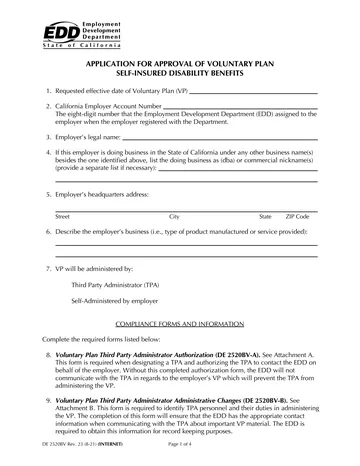
California, New Jersey and Puerto Rico let an employer replace the state plan with its own approved plan, and in New York and Hawaii a plan is how the employer complies. California calls it a Voluntary Plan: “A State-approved Voluntary Plan (VP) is a disability insurance plan that an employer can offer to its California employees as a legal alternative to mandatory State Disability Insurance (SDI).” It must “Offer all the same benefits equal to SDI and at least one benefit that is better.” and needs “written approval from the majority of employees eligible for coverage”. New Jersey: “All private plans must be approved by the Division of Temporary Disability and Family Leave Insurance before they become effective.” and “The cost to the worker for the private plan cannot be more than it would be under State Plan.”
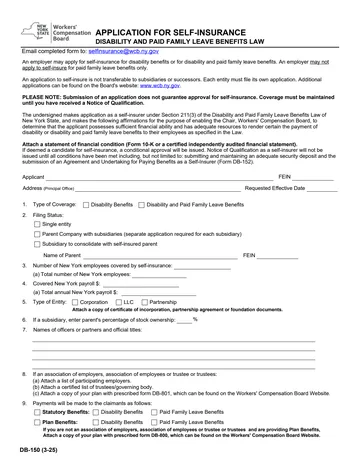
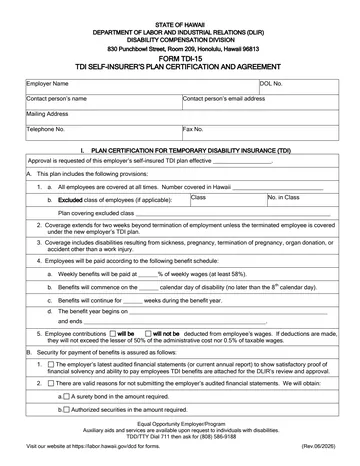
In New York and Hawaii the private plan is the program. New York employers buy a policy from a carrier or the State Insurance Fund, or self-insure with the Board's approval. Hawaii allows an insured plan, a self-insured plan, or a bargained plan; “All self-insured plans must be submitted (FormTDI-15) to this Division for review and approval before they can be put into effect.” Puerto Rico's DTRH approves private plans that start on July 1. Rhode Island has no private plan route: no section of its TDI chapters (R.I. Gen. Laws 28-39 to 28-41) provides one. Plans that may need a federal Form 5500 are covered on form5500.org, and the approval rules side by side will be on PFML private plans by state.
Reports and payment
The state fund programs report quarterly. California's employer files in e-Services for Business: “The DE 9 reconciles reported wages and paid taxes for each quarter.” and “The DE 9C reports individual employee wages for each quarter.” SDI is deposited with state income tax withholding: “Due dates for combined deposits of SDI and PIT are based on an employer's federal deposit schedule/requirement”. New Jersey's NJ-927 and WR-30 are filed online and “must be received no later than the 30th day of the month after the close of the quarter”; “No extensions are granted if the due date falls on a weekend or holiday.” Rhode Island's TX-17 is filed through Online Tax Reporting, and “Quarterly taxes are due on the last day of the month following end of the quarter; January 31, April 30, July 31, and October 31.” Puerto Rico's SINOT contributions are due quarterly by the last day of the month after the quarter and are filed and paid in Desempleo Digital.
New York and Hawaii have no state contribution report. In New York, “When an employer obtains an insurance policy, it is the insurer's responsibility to electronically notify the Board of that coverage”. Hawaii collects no contribution, so there is no quarterly TDI return to file; the employer's duties run to its plan and to the Division's notices. The due dates for every program are on PFML reports and due dates.
Federal tax treatment
Of an employee's contribution to a state program, Rev. Rul. 2025-4 says “Even though these amounts are withheld from the employee's wages, they are included in the employee's gross income”, and disability benefits are sick pay. New Jersey tells employers “Benefits payable under the Temporary Disability Benefits Law are considered ‘third party sick pay.’” In New York, “Benefits paid by the employer or insurance carrier are subject to Social Security and Medicare taxes.” The ruling treats the part of a state medical leave benefit funded by employer contributions as wages that “are third-party payments of sick pay”, but it is limited to state plans: “This revenue ruling does not address the Federal tax treatment of employers' or employees' contributions to private or self-insurance family or medical leave plans”. That leaves insured and self-insured plans, which is most of New York's DBL and Hawaii's TDI, outside the ruling. Our pages on third-party sick pay and SDI on pay stubs and W-2s cover the Form 941 lines and box 14.
What changes in 2027
California's rate rises to 1.4% on all wages. New Jersey's worker TDI and FLI both go to 0.24% on a base of $177,100, and its maximum TDI benefit rises: “2027 Maximum Temporary Disability Insurance weekly benefit rate: $1,158”. Rhode Island's benefit rate rises by statute, “for benefit years beginning on or after January 1, 2027, and prior to January 1, 2028, five and thirty-eight hundredths percent (5.38%)” of high-quarter wages (28-41-5), and its 2027 contribution rate was not yet posted. New York's DBL contribution stays at $0.60 a week. Hawaii's 2027 weekly cap is due before Jan. 1. Puerto Rico's 0.60% on $9,000 had no published change as of Nov. 22, 2026. The IRS relief for state-paid medical leave benefits ends: “This notice is effective for medical leave benefits paid from States to individuals during calendar year 2026.” Every 2027 change is on PFML changes for 2027.
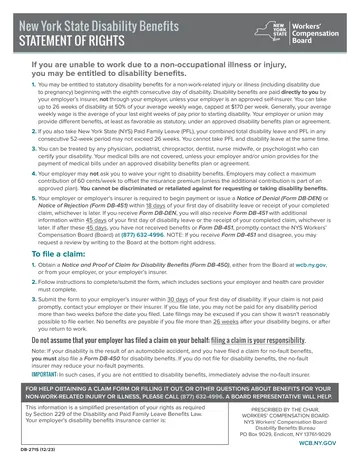
Forms, line by line
Questions employers ask
What is the difference between SDI and TDI?
Only the name. California calls its program State Disability Insurance (SDI); New Jersey, Rhode Island and Hawaii call theirs Temporary Disability Insurance (TDI); New York's is the disability benefits law (DBL); Puerto Rico's is SINOT. All pay part of wages while an employee cannot work because of an illness or injury that did not happen at work.
Does the employer pay for California SDI?
No. SDI is withheld from employees' wages, 1.4% of all wages in 2027 with no cap. The employer withholds it, deposits it with state income tax withholding and reports it on the DE 9 and DE 9C.
Can a New York employer take more than $0.60 a week for disability benefits?
No. The employee's DBL contribution is 0.5% of wages but no more than $0.60 a week; the employer pays the rest of the policy cost. Paid Family Leave is a separate contribution on the same policy, with its own rate and annual maximum.
We are in Hawaii. Do we send TDI money to the state?
No. Hawaii does not collect a disability tax. The employer must have an insured, approved self-insured or bargained plan in place, and may withhold up to half the cost, capped at 0.5% of weekly wages and the published weekly maximum.
Do disability benefits go on the W-2?
Benefits paid by an insurer or a state fund are sick pay, and the employer-funded part is subject to Social Security and Medicare tax. Who reports it depends on the program and on whether the payer shifts the duty to the employer; our third-party sick pay page walks through it.
Sources
- California EDD: Rates and withholding, California Employer's Guide (DE 44), Required filings and due dates, Voluntary Plan; Unemployment Insurance Code 984
- New Jersey Department of Labor: Information for employers (TDI and FLI), Rate information, Employer handbook, TDI and FLI
- New York: Workers' Compensation Law 209; WCB Disability and Paid Family Leave benefits for employers, Is coverage required?, Eligibility and benefits
- Rhode Island: DLT TDI and TCI for employers, Employer tax unit; R.I. Gen. Laws 28-40-1 and 28-41-5
- Hawaii: HRS chapter 392; DLIR Disability Compensation Division About TDI, TDI FAQ, Guidelines
- Puerto Rico: DTRH SINOT; IRS: Rev. Rul. 2025-4, Notice 2026-6